

Nobody Knows the Sidewalks I’ve Seen

Duluth Sidewalk Inventory

You might have seen a wiry, long-haired fellow wandering the streets of Duluth staring intently down at his phone over the last few weeks. That guy is me, the MIC’s intern for this summer. And that phone is actually a GPS device called a Trimble Juno. I’m using it to record the condition of every section of sidewalk in the city. With my trusty GPS in hand (which I call Lil’ Julie) I walk slowly through the streets recording three different bits of information for the Duluth Sidewalk Inventory.

Condition Rating
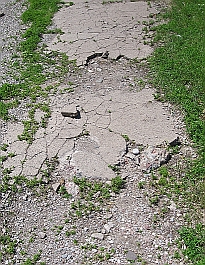
The first is the sidewalk condition rating. The options are Excellent, Good, Fair, and Poor. “Excellent” is basically for brand new sidewalks, immaculate and brilliant white. “Good” means that they don’t have any cracks and haven’t sunken or heaved. “Fair” means that there are cracks and vegetation growing up through those cracks. They generally have some sunken or tilted sections that leave small raised edges. “Poor” sidewalks are pretty rough. These have major surface defects—broken pavement, big holes and the like.

Curb Ramps

The second criterion is the condition of the curb ramps. A curb ramp is that sloped portion of sidewalk on each corner. It allows disabled persons to transition from the street level to the sidewalk level and vice versa. These are rated along the same scale as the sidewalks. Some sidewalks don’t have curb ramps at all. In situations like that the sidewalks are almost entirely inaccessible to disabled persons.

Obstructions
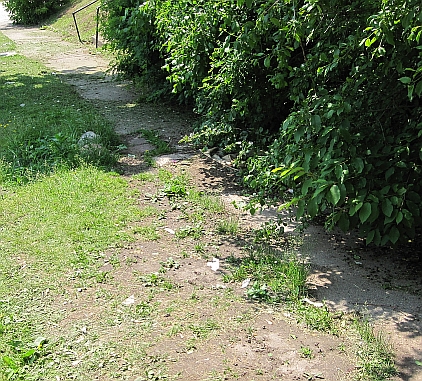
The third thing that I do is note any obstructions in the sidewalk. These generally consist of raised edges greater than ¾” and overgrown vegetation; though sometimes I do spot obstructions like raised utility access panels or signs in the sidewalk.

Targeting Scarce Resources

It’s not an easy job (did you know there are over 400 miles of sidewalks in Duluth?), but it really is important information to collect. With this data the city can target its resources to the spots that are in greatest need of repair. Lots of people, young and old, able-bodied and disabled persons alike, depend on these sidewalks for their own personal mobility and freedom. It’s good to know that the MIC’s sidewalk inventory works toward improving that.

Do You Have Your Own Examples?

Follow my progress on the MIC’s Facebook page. I’ll be posting updates on my progress all summer and adding pictures in the Unhappy Sidewalks of Duluth photo album. Do you have some real gems in your neighborhood? Some epic branches blocking your morning run? We’re also looking to identify sidewalk segments—in any condition, good or bad—that are important because they’re so heavily used.

Take a picture and post it to our wall or email it to me.

Roads, Trails, or Both?

Priorities for Duluth’s Transportation System

As discussed in our previous blog, approximately $45 million in federal funds are being programmed for Duluth area transportation projects for 2012-2015.

The draft Transportation Improvement Program (TIP) spells out costs and timeframes for a total of 36 high-priority projects over four years and is now open for public comment.

Balancing the needs of all users

It seems we easily divide ourselves into those who drive versus those who ride the bus versus those who bike and so forth….an “us versus them” scenario.

Well, in reality the transportation system—and the public spaces they are a part of—are used by people in a much more complex way. You might drive to your job or to shop, but there will always be some amount of walking involved, from car to final destination and back again. You might use the sidewalks for walking from place to place, but also for stopping to talk to your neighbor in a common space. You might ride your bike down the big hill but put it on a DTA bus for the trip back up.

Looking through this lens, from the perspective of the users of the transportation system, you can see how this TIP has a major focus on how to really connect people in the safest and most efficient way possible. 

Continuing to fix the highways

Preservation work on the two major bridges is needed to refurbish the Blatnik (I-535) in 2012 and the Bong (US Highway 2) in 2014. These TIP projects not only have the highest price tags and but also will receive the most attention—yes, just when the I-35 reconstruction “megaproject” is finished, there will be several more years of high-profile road construction projects, on the bridges this time!

Improvements for those who walk, bike, or take the bus

While the highway projects are devoted solely to cars and trucks, funding is also included to provide a safe alternative to driving.  A paved pedestrian and bicycle pathway, running parallel to I-35, will connect the whole city from west  to east. The Munger Trail will eventually extend all the way to the Lakewalk by constructing short segments of a new Cross-City Trail each year. The popular Duluth Lakewalk will in turn be extended from 60th Avenue East to Highway 61, and then out to Brighton Beach up the north shore.

Funding for the Duluth Transit Authority will purchase new buses and provide operating support for both its regular route and STRIDE bus service.

And thanks to recent Complete Streets efforts in Duluth, local street projects will take into account how the roads are being used by people every day and will be designed accordingly.

The projects funded in the draft 2012-2015 Duluth area TIP balance the need to move vehicles efficiently with the needs of all people who use these public spaces, including those who utilize public transportation, those who traverse the roads by bicycle and those who are on foot.

Which makes sense to us – what do you think?

Now Accepting Comments on…What?

From now until Friday, June 24, the MIC is accepting public comment on the draft Duluth 2012-2015 TIP.  No, this TIP is not a hot piece of insider advice.  It’s a bureaucratic document, and admittedly it can be quite dry.  But it’s much more important than it sounds, and we think it will be of interest to you as something that impacts your day-to-day life.  Want to get a road repaved?  A trail built? A new traffic signal on a route you take everyday?  There’s a good chance that project has to make it through the TIP process first.

Transportation Improvement Program

TIP stands for “Transportation Improvement Program” and it’s an annual document that lists what local transportation projects will be receiving federal funding in the coming years.

The current TIP (2012-2015) for the Duluth area contains a total of 36 projects planned to receive approximately $45 million in federal funds.

In actuality, $45 million is just a portion of what’s being spent on transportation improvements in the region, with federal funds typically accounting for less than 25% of what’s spent on road improvements in Duluth in any given year.  And yet this federal money can have a very catalyzing effect.

80% Federal Funding = Incentive for Innovative Local Projects

It’s often this federal TIP money that incentivizes more comprehensive, and often more innovative projects.  That’s because local governments are only required to match those funds 20 cents to the dollar. Or another way to say it: the federal government funds 80% of the project.  This can make an improvement like the upcoming Cross City Trail (an exciting new link between the Munger Trail and the Lakewalk) a more feasible project for the City of Duluth to pursue. 

The other projects in this year’s TIP are aimed at preserving existing roads and bridges, as well as strengthening connections among alternative modes of transportation.

Virtual Public Meeting – Seeking Your Questions and Comments

You can take a look at the list of Duluth area projects for 2012-2015 and consider using Open MIC like a ‘virtual’ public meeting by leaving us any questions or comments you might have about the projects.

Public comment period runs until Friday, June 24, 2011.

Moving Stuff by Water – Cheaper, Safer, Greener

We were reminded at today’s National Maritime Day celebration at the DECC that maritime transportation is vital part of the national and our own local economy.

Waterborne transport efficiently moves both bulky natural resource materials and finished goods to global destinations.

Jim Weakly, president of the Lake Carriers’Association, in his keynote address, pointed out that Without water transportation the cost of all goods would be much higher.  Moving bulk goods by water is the most efficient, least costly, safest and most environmentally friendly method of transportation.  If water transportation was not available, all of those goods and materials would have to move by land which would increase congestion and cause higher levels of air pollution due to increased fuel use.

The Forgotten Mode?

Maritime transportation can be the forgotten method of moving goods and people—even here in Duluth, home of many a boat nerd.  Ships are visible to the general public when they are in port but while in transit may be many miles from shore and it’s out of sight, out of mind.

Here in the Twin Ports, iron ore from the Minnesota Iron Range moves to steel mills in the lower Great Lakes. Grain from western Minnesota and the eastern Dakotas moves to destinations throughout the world.  Nationally and internationally, finished consumer export and import goods arrive and depart from our coastal ports.  Almost everything we consume has at some point moved by water.

National Maritime Day

Originally held in observance of the value and importance of the U.S. maritime industry, National Maritime Day commemorated May 22, 1819, when the SS SAVANNAH sailed from her home port of Savannah, Ga., bound for Liverpool, England, becoming the first steam vessel to cross the Atlantic Ocean.  The observance later became more of a day to honor merchant mariners and merchant marine veterans, primarily those involved in WWII and other armed conflicts around the world.

Today, through efforts of numerous organizations including the Propeller Club of the United States, National Maritime Day is observed as a combined salute to merchant mariners, merchant marine veterans and the entire maritime industry, focusing attention on the benefits maritime brings to America’s economy, trade, national security, employment, environmental protection, recreation and quality of life.

M/V Hon. James L. Oberstar

The Interlake Steamship Company has announced the renaming of the ship Charles M. Beeghly in recognition of the Hon. James Oberstar, retired United States Congressman from the State of Minnesota.  The naming of the ship is in recognition of Congressman Oberstar’s work toward improving maritime transportation in the Great Lakes.  A ceremony christening the newly named ship will be held harbor side of the DECC on Tuesday May 23 at 10:30am.

Who, Me, Bike to Work? Yes, You!

When is the last time you smelled the lake air during your morning commute?

Or pulled into the parking lot with a big smile on your face, pumped with endorphins and ideas? Or lost a few pounds just by traveling back and forth to work every day?

Likely never, if you slide behind the wheel of your vehicle each morning.

But what if one day you left the car in the driveway and rode a bike instead?

On Friday, May 20th, we invite you to ride your bike to work. To reward your commute, we’ll have a couple of bicycle stations open from 6:30 am to 8:30 am with

  • Coffee, water and refreshments
  • Bike mechanics to look at brakes, tire pressure and other safety checks
  • Advance copies of the new and improved Duluth-Superior Bike Map

The bike stations will be located at:

  • Lake Ave & Superior Street in Duluth (Minnesota Power Plaza)
  • Tower Ave & Belknap Street in Superior (City Center Park)

Give biking to work a try – for just one day. Stop by and say hello.

Detour Ahead: Find Out Exactly Which Streets You’ll Have to Avoid This Construction Season

Congratulations, you have survived another winter in Duluth-Superior!

Coming soon…the construction season.

Work has already resumed on the I-35 Mega Project, but many other city, county, and state projects are scheduled for the Duluth-Superior area this year, including:

  • Midway Road (U.S. Hwy 2 – MN HWY 194)
  • West Skyline Parkway around Enger Park
  • 21st Avenue East;
  • Arrowhead Road from Kenwood to Rice Lake Road
  • Martin Road from Howard Gnesen Road to Rice Lake Road
  • U.S. Hwy 2/Belknap Street from Hill Avenue to East 2nd Street

Click on the “plus” sign on the map, below, to zoom in and then click on the traffic cones for details about specific projects:

View Larger Map

Give it a try and tell us what you think.

Driving Less is Green, Sassy and Good for You

A view from an awesome local bike commuter

Not to mention, much cheaper. With gas prices approaching $4 a gallon – here’s our top five suggestions for easing the pain at the pump.

1. Bike to Work
Biking as a transportation option—to get to work or to run errands—is low-tech, fun, healthy and easy on the environment. Check out the Minnesota Bike Commuter blog for some local inspiration and the Zen Habits blog for some attitude adjustment.

We’re also updating our Duluth-Superior Area Bike Map — stay tuned for the new one, due out in time for Bike to Work Day on Friday, May 20, 2011.

2. Walk
Walking to work is even simpler than biking. It’s a fabulous, no-tech way to stay healthy and save money on commuting costs. For the price of a decent pair of shoes, you can enjoy the natural beauty of this place that we love and reap numerous health benefits. It just takes a little planning to make it work for you.

Also, check out the Duluth Sidewalk Inventory the MIC will conduct during the summer of 2011, to improve the pedestrian environment around town.

Finally, check out the cool tools on the Walkscore.com website to map out your walking distance to restaurants, bars, parks, book stores, coffee shops and more.  Figure out what really is within walking distance, hills included.

3.  Get on the bus – for free.
Did you know the DTA began running its West Mainline express service again? During the I-35 construction season, people commuting into downtown from the West now have an opportunity to ride round-trip for free from now until October.

Check out this cool Google mapping application to find DTA routes and schedules for your destination.

4.  Drive partway
If you’re driving in from a distance, try parking at one of the DTA’s Park and Ride lots and ride a bus to work from there. There are three Park and Ride locations in Duluth and one in Cloquet to ride via LCS Coaches.  Parking is free and fares are reasonable.

5.  Trip chain
Remember when you got your chores done all at once so you could go out and play?  Trip chaining is the same idea. Here are some trip chaining facts to consider:

This is because emissions are highest when a vehicle is started “cold.” Starting a 5-mile trip when the engine is cold generates about 17% more nitrogen oxides and 50% more volatile organic compounds than the same trip when the car is started warm.

So pick your best option, and try something besides driving.  Tell us how it went!

Photo credit: MnBicycleCommuter

Guiding the Future of Transportation and Planning – With Your Input


We need your input to help us accomplish our mission: ”Guiding the Future of Transportation for the Twin Ports Area.” Our job is to think ahead and plan for ways that federally-funded infrastructure investments can improve the ways we travel around this area — not just on roads, but also on foot, by bike, and on the bus.

Part of what we do is to seek out and incorporate ideas and information from area residents, elected officials, planners and engineers from all local jurisdictions (city, county, state and township). With your input we can encourage good local policy decisions and put forward projects for federal transportation funding that will enhance livability and optimize the movement of people and goods within the Duluth and Superior metropolitan area.

That’s where this blog comes in. We’re looking forward to speaking with you about everything transportation-related going on in the Twin Ports. If you want to be alerted when we start posting content later this month, just drop your e-mail into the slot on the right that says “Want This Blog Via Email?”

And we’re already talking with you on Facebook.  To join us there, just click on the link here.http://www.facebook.com/dsmic

Bye for now.  Hope you’ll stay tuned and become part of the conversation.